
Introduction
Imagine bringing the magic of nature indoors; a miniature world thriving in glass, where plants, moss, and tiny creatures work together to create their own self-sustaining ecosystem. Bioactive terrariums are more than decorative displays; they’re living art, blending science, sustainability, and creativity.
Whether you’re a plant lover, a pet owner or simply seeking a calming focal point for your home, a bioactive terrarium offers beauty, education, and low-maintenance appeal.
What Is a Bioactive Terrarium?
A bioactive terrarium is a closed or semi-closed container that houses live plants, a specialised substrate, and a “clean-up crew” of microfauna such as springtails, isopods and millipedes. These tiny organisms break down waste, recycle nutrients, and keep the ecosystem balanced; mimicking the natural processes found in our world’s forests and jungles.
In this article, we’ll explore how Bioactive terrariums sustain themselves, breaking down the layers and the important part each one plays in supporting the system as a whole. We’ll also see why these tiny jungles are so beneficial to any home or workspace.
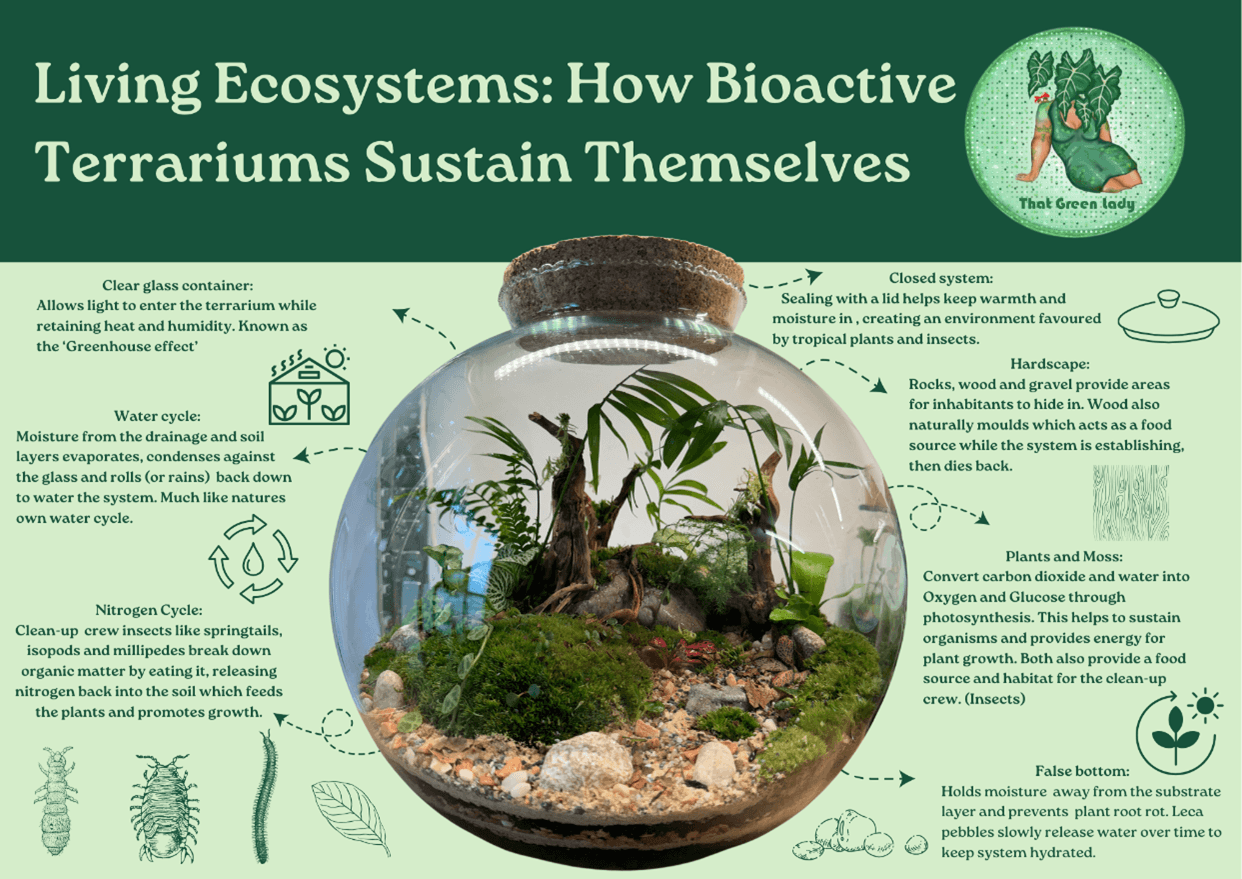
Key Components:
- Container: Glass jars, bottles, tanks, vivariums or any other clear and lidded vessel.
- Drainage Layer: The bottom layer that prevents waterlogging and root rot by giving excess water a place to settle outside of the soil. (e.g., gravel, LECA pebbles).
- False Bottom: A layer of Geotextile fabric, mesh or sphagnum moss to separate the drainage and substrate layers. This is optional but really helps to keep layers neat and even for better aesthetics.
- Filtration: A thin layer of activated charcoal above the false bottom. As the water in the container moves through the water cycle, it passes through the charcoal which draws out any impurities or contaminants that may harm the terrarium or its inhabitants.
- Substrate: A mix of soil, ours is made of coco coir, perlite, worm castings and other organic material to support plant growth and microfauna. An ideal mix will be well draining and light to aid aeration in a constantly damp environment.
- Plants & Moss: Provide oxygen, humidity, and habitat. The best choice of plants are compact, slow growing tropical plants that thrive in a closed environment with limited airflow, such as Ferns, Fittonias, Pilea etc. We love to use mostly Cushion moss (Leucobryum glaucum) in our makes, but there are many other species of moss that are perfect for the humidity of a closed system.
- Hardscape: Rocks, wood, and decorative elements for structure and visual interest. Wood elements such as spider wood branches especially help to support clean-up crew by initially moulding in the first few weeks of setup. This provides a food source for springtails and eventually dies back.
- Clean-Up Crew: Springtails and isopods and millipedes among others break down organic waste, cycling nutrients back into the soil and supporting long-term health. We add springtails only to smaller builds, but isopods and Millipedes can be added to larger pieces.
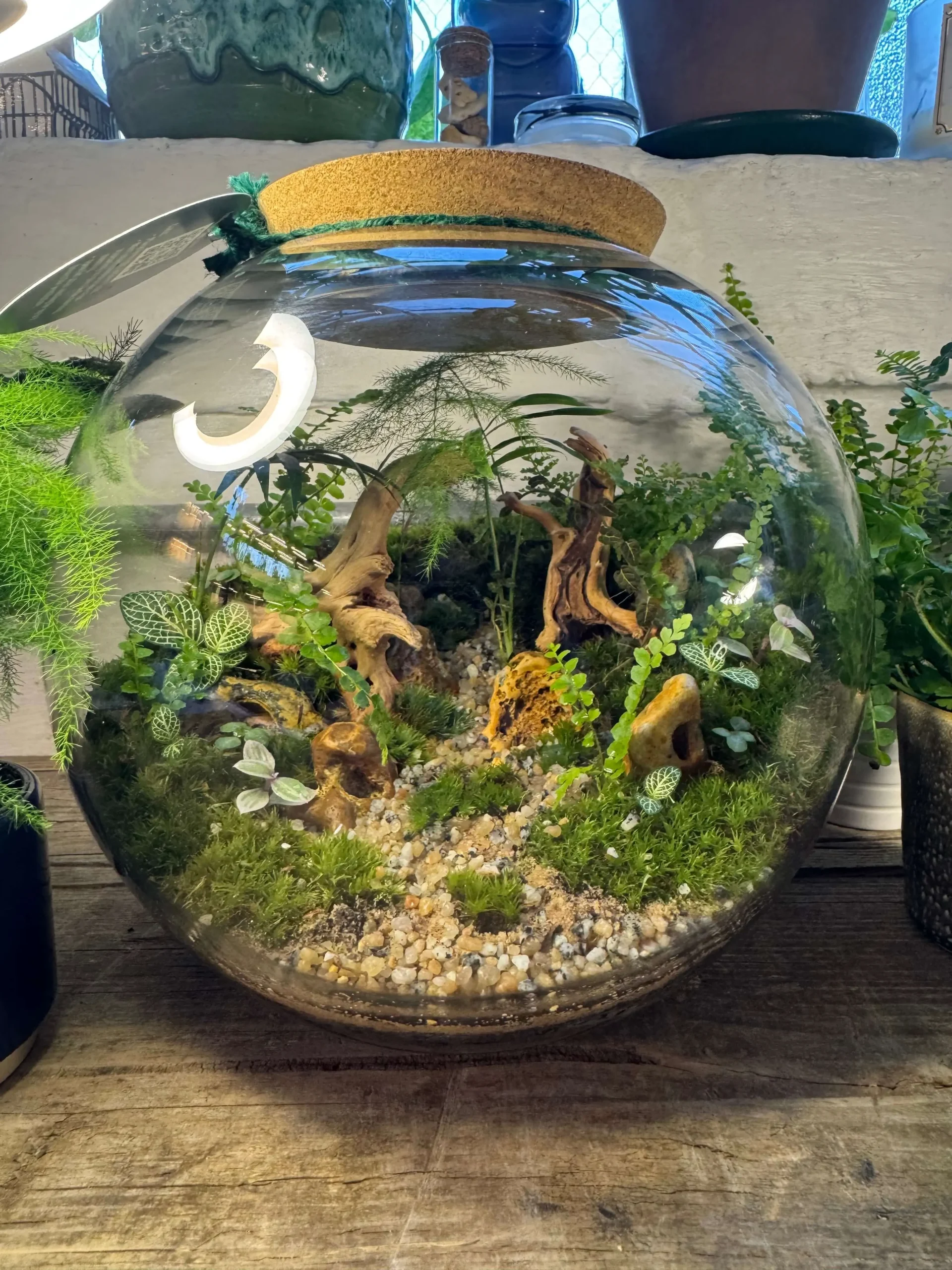
Low Maintenance
Once established, the ecosystem largely takes care of itself, limiting the need for continuous maintenance.
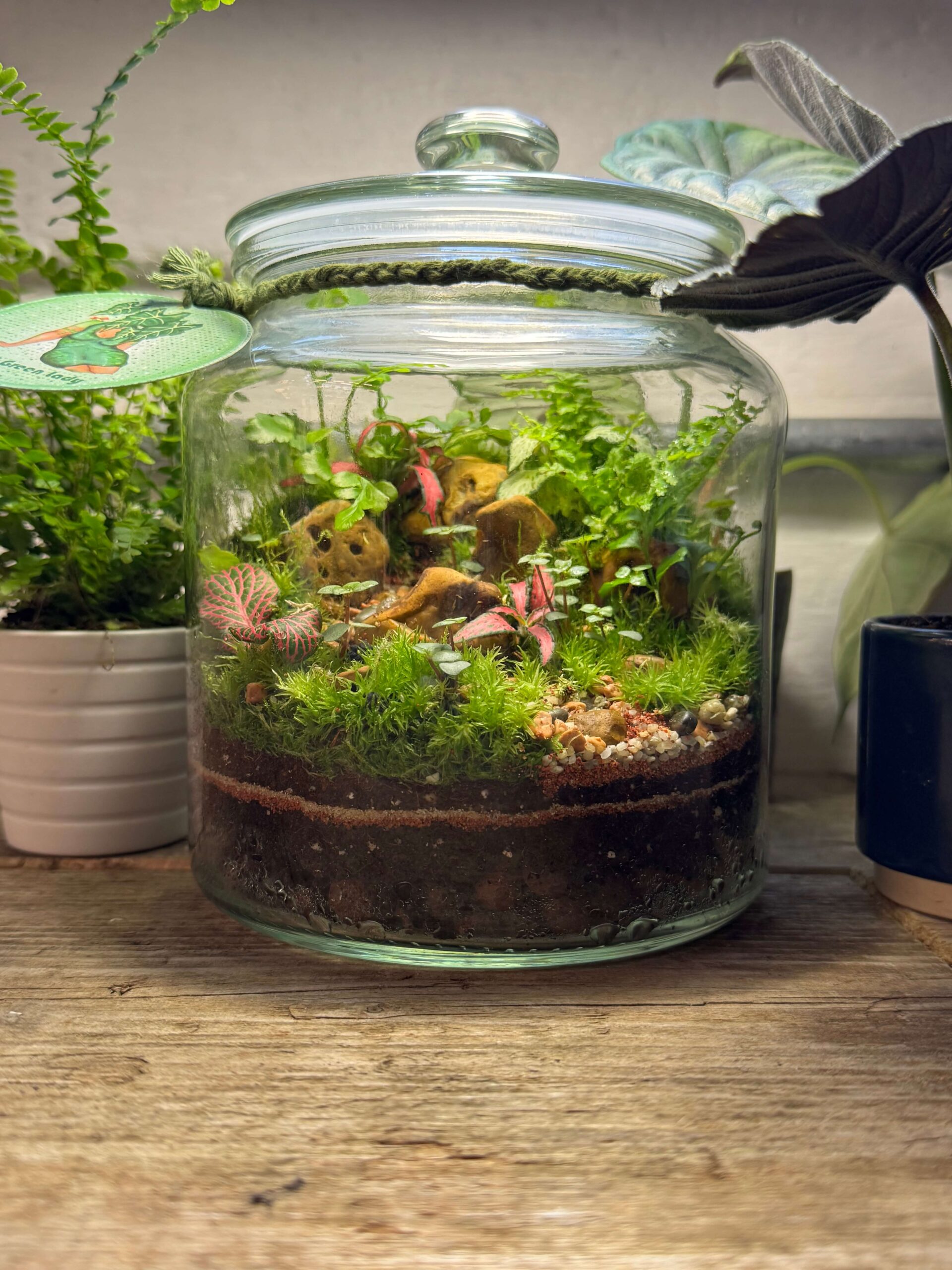
Educational Value
Offers a hands-on lesson in ecology, nutrient cycling, and sustainability, giving a snapshot of the natural processes happening beneath our feet and fostering a much-needed connection with nature.

Aesthetic Appeal
Lush greenery and natural hardscape create a calming, visually striking display for any living and working space, large or small.
Sustainability
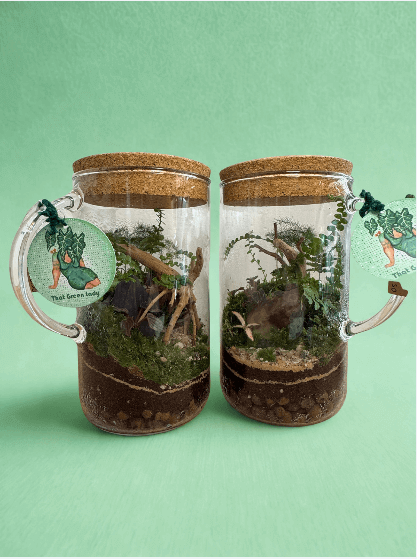
Many setups (Like ours!) utilize upcycled containers, figurines and ethically sourced materials, promoting environmental stewardship and further fostering a connection with nature, while breathing new life into previously unloved items.
Maintenance Tips
• Place in bright, indirect light: Make sure to keep your terrarium out of prolonged direct light. Direct sun can quickly overheat a closed glass container, causing too much moisture to evaporate and condense outside of the soil, stressing plants and microfauna as well as burning moss and leaves. If you can read a book in daytime with no additional lighting in the room, there is plenty of light for your terrarium.
• Monitor Moisture: Ensure the substrate stays moist but not soggy. A Terrarium should always have some condensation, usually in the morning and evening but clearing up through the day. Once this no longer appears, mist the container. Roughly every 6-12 months and sometimes longer. If your terrarium is always foggy, consider moving it further from a light source and periodically airing it for an hour at a time until it settles.
• Trim Plants: You can prune any overgrown plants to keep your terrarium looking its best and to prevent overcrowding. Our 5 piece building and maintenance toolkit is perfect for this kind of gentle upkeep. Some species, like fittonias, can even be propagated from the cuttings you take. Everyone has their own style when it comes to terrarium growth. Some people prefer a neatly trimmed, garden like look, while others enjoy letting their miniature world grow wild and jungle like, allowing plants to compete for space and seeing how the ecosystem evolves. There’s no right or wrong approach; it’s your tiny world, and you get to decide how it grows.
• Check Clean-Up Crew: Observe springtail and isopod populations which will regulate their own colony size based on space and food sources in the container. These can be topped up over time if the colony dwindles.
Conclusion
Bioactive terrariums are a gateway to reconnecting with nature, offering a blend of beauty, science, and sustainability. Whether you buy a ready-made piece, build on your own or join a workshop, you’ll discover the joy of nurturing a living ecosystem that thrives with minimal intervention. Bring the outside in, and let your miniature world flourish!
Ready for your own bioactive terrarium? Visit our shop and Events pages to explore Ready-made pieces, DIY kits, and workshops to create your own living art!
